What happens to the goods between the seller and the parcel
Opened, checked against the order, photographed three times, repacked into a sealing bag, then stored on a clock. Each of those steps has a rule, and two of the rules are stated more than one way.
The free check
What QC covers: the free inspection, in the operator's order
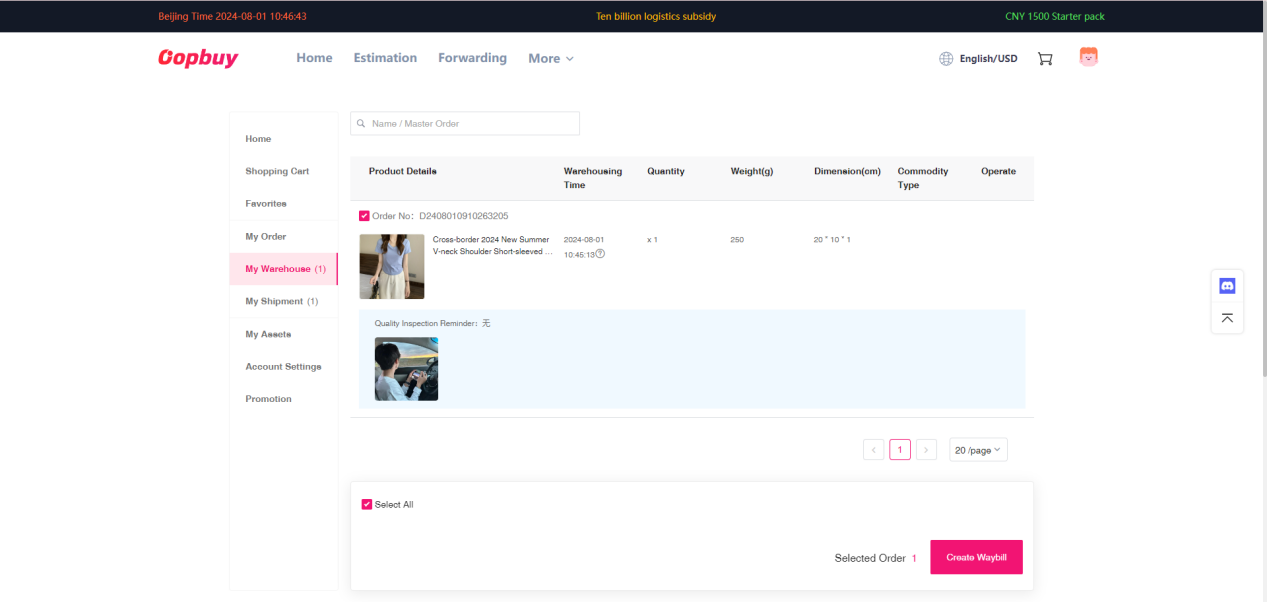
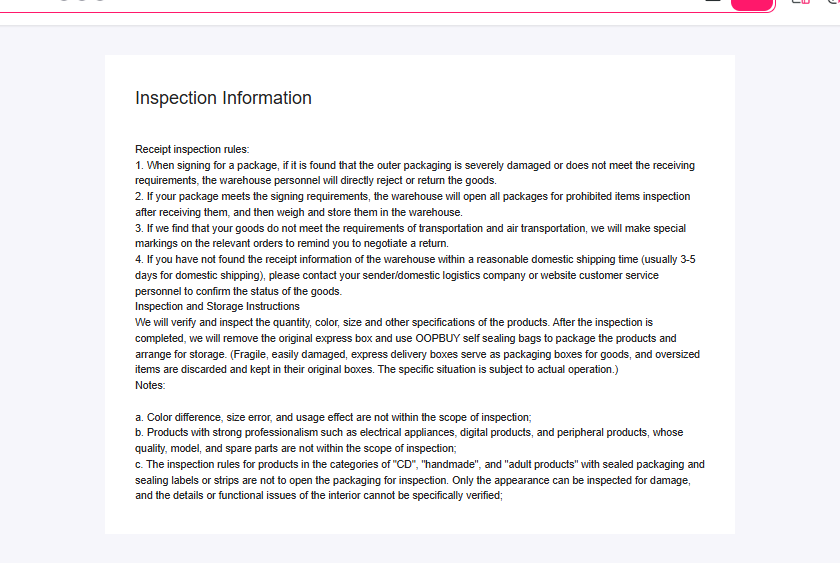
Every parcel is opened for prohibited goods, weighed and stored. If you chose inspection, the warehouse verifies quantity, colour, size, model and version number against the order and looks for large-area damage and stains. Clothing is judged by the size on the label or hang tag. Three photos follow: front, back, and side or logo. Then the courier box goes, and the goods go into the operator's own sealing bag; fragile, oversized and boxed-as-product items keep their box, subject to actual operation.
Excluded by name: colour difference, size error, usage effect. Electronics and digital goods are appearance only, never powered on, sealed accessories not counted. Sealed CDs, handmade goods and adult products are not opened. And the sentence that decides most disputes: for unconfirmed information such as products with no obvious damage, the warehouse assumes you have communicated and reached an agreement with the merchant.
How to check the QC photos you get, and what to add
QC here means the free inspection and its three photos. Read the QC photos for identity first: is this the colourway you chose, is the print where the listing showed it, is the hardware the right finish. Condition questions the frame cannot answer are what the add-ons are for. A one-yuan detail photo can carry a tape across the chest or along an inseam. Custom QC measurements, on request, cover shoe length, insole length, pants length, garment length and width, logo placement.
Name the product number and the number of photos when you ask, because one photo is one angle. Ask at order time if you can; after stock-in the same service still costs one yuan, but the 120-hour return clock is already running while you wait for it.
Storage: four statements, one number to plan around
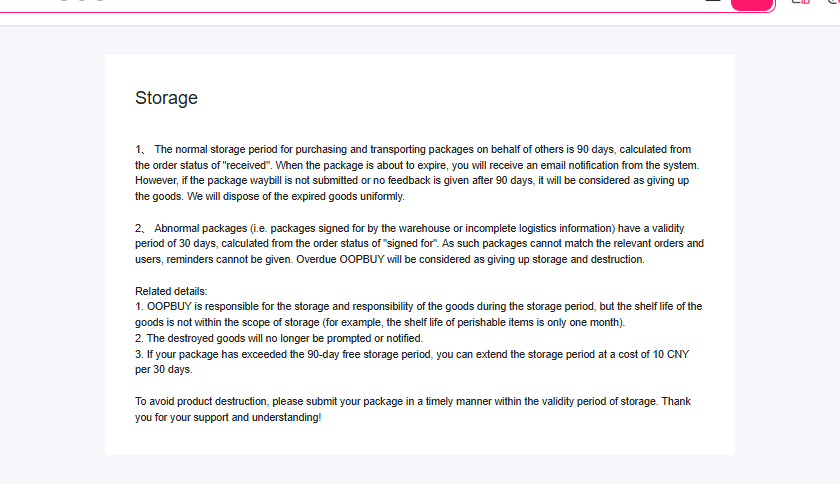
Ninety days free from the received status, on three pages. Up to six months free, on a fourth. The extension costs ten yuan per thirty days on the Storage page, ten yuan per product ID per month and only while stored sixty to ninety days on the services table, and once only for thirty days on the customised-services page, which also sets a hard total of 120 days before the sub-order is marked abandoned.
| Page | What it says | Created about |
|---|---|---|
| 1739835834901827585 | You have up to 6 months free storage to store your items. | 2023-12-27 |
| 1740664252140720130 | The normal storage period … is 90 days, calculated from the order status of received. | 2023-12-29 |
| 1775431599229829121 | 90 days free storage; expired goods are disposed of. | 2024-04-03 |
| 1775428853873311746 | The free storage period for normal package purchases and transfers is 90 days. | 2024-04-03 |
| 2062456211424555010 | Free of charge for 90 days from the date of warehousing; after one paid extension the total is 120 days, then Abandoned. | 2026-06-04 |
Plan around ninety, and treat one paid extension of thirty days as the ceiling. Abnormal parcels, the ones that arrive without an order attached, get thirty days and no reminder, because there is no account to remind.
Returns: 120 hours, and who pays
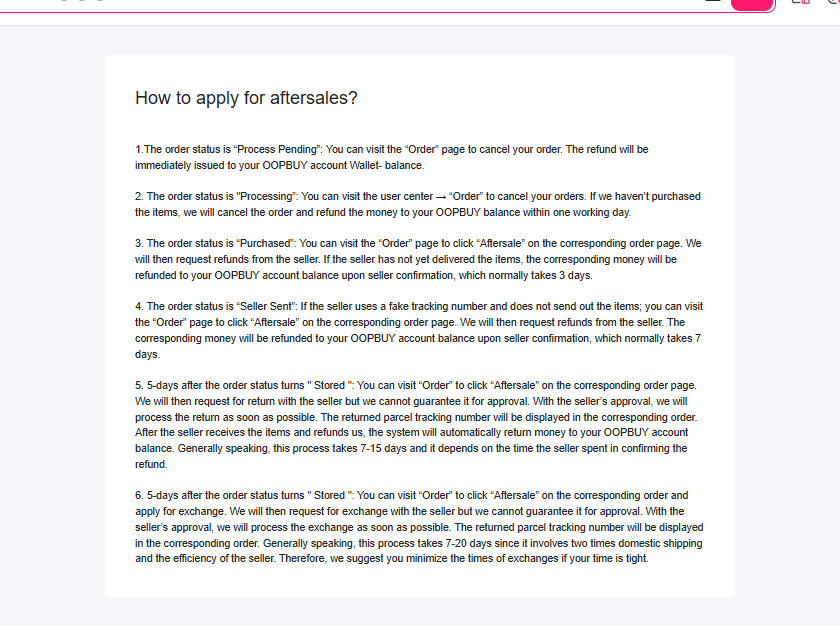
The five-day return or exchange guarantee runs 120 hours from the next hour after the status turns Stocked in; the same page's first sentence says seven days from signing, which is the longer of the two and not the one to plan on. Conditions: the seller offers returns, the item is re-saleable, and it has been in the warehouse no more than five days.
Who pays follows the responsible-party table. Your reason (changed your mind, wrong size, shipping dearer than you budgeted, seller finds no fault): you pay both shipping legs plus five yuan, with roughly one operation a month free of the five, on whichever clock the request page is counting. Seller's reason (wrong item, real quality fault): the seller normally pays, unless the seller insists otherwise. Free shipping at purchase is paid back on a return. Refunds to a card take seven to fifteen days; wallet refunds are faster and are the default.
Ineligible outright: custom-made, tags or packaging removed at your request, second-hand, goods from outside the mainland, underwear, adult products, food, fifteen or more books, and sealed goods whose packaging standard is broken.
Repacking, fragile goods and the line between the warehouse and the carrier
Because the courier box is discarded at inspection, the packing you choose at parcel time is the only protection most goods get. The operator's own advice: vacuum bags for clothes and puffers, cartons when shoes travel with clothes, bubble wrap and stretch film as the cheap defaults.
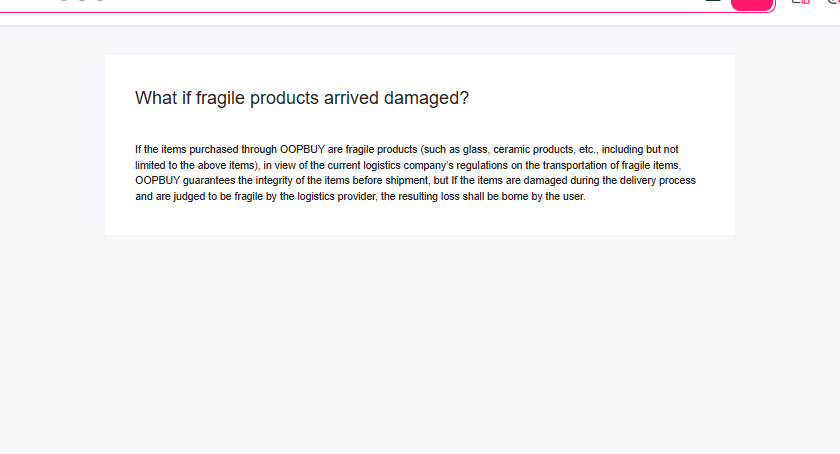
Fragile goods are the exception that proves the boundary. The operator guarantees their integrity before shipment; damage in transit is yours, whatever packing you bought, and insurance on fragile items pays for loss only. Glass and ceramics are the named examples.